

See If Your Manukau Apartment Is Ready for EV Charging
Many Manukau apartment buildings can support EV charging, but the answer is rarely a simple yes or no. Before buying a charger, we recommend finding out how your building is set up, where you park and who controls the electrical areas involved.
Professional site assessment is the first step in EV charger installation in Manukau. We look at the existing electrical infrastructure, the location of your parking space and the practical path a cable would need to take. That helps avoid choosing equipment that does not suit the building.
Apartment parking can look very different from one property to the next. You may have:
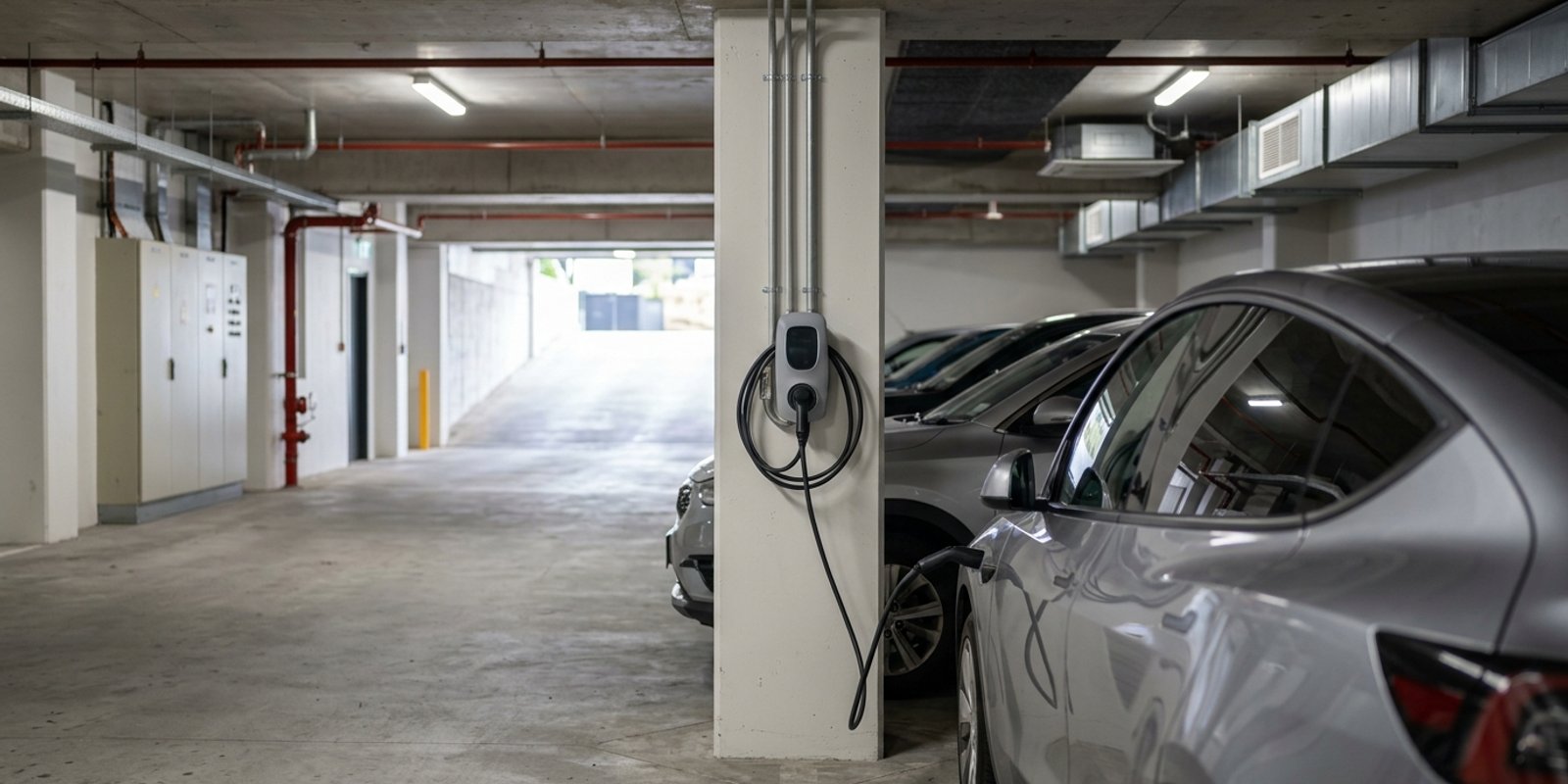
- An allocated bay in a basement
- A shared outdoor car park
- A covered parking area near the building
- A visitor space that is not assigned to one resident
Your charger needs a safe, sensible route from the electrical supply to the vehicle. Cables should not cross walkways, create trip hazards, block doors or interfere with other residents using the car park. A good plan considers daily access, not just where a charger could physically fit.
Understand Ownership, Body Corporate and Consent
Owning or leasing a parking bay does not always mean you can alter everything around it. In apartment buildings, the bay itself may be private, while the walls, ceilings, switchboards, cable trays and electrical supply are common property.
That distinction matters because an EV charger may connect to shared building infrastructure. We often find that body corporate approval is needed before any work begins, particularly when cables run through common areas or when equipment is mounted on shared surfaces.
Approval processes can cover practical details such as:
- Where the charger will be mounted
- How cables will be contained and protected
- The appearance of equipment in common areas
- Ongoing maintenance responsibilities
- How charging electricity will be measured and billed
Reading the body corporate rules early can save a lot of frustration later. Written approval gives everyone a clear record of what has been agreed to, and it can help prevent disputes when residents change or future building upgrades are planned.
Match Charger Design to Your Building's Capacity
An apartment building's electrical capacity plays a major part in what charging setup will work safely. Some buildings have room for additional electrical demand, while others may need upgrades before new charging equipment is added.
During EV charger installation in Manukau, we inspect the switchboard and identify available capacity. Older buildings may require extra circuits, switchboard work or other improvements before a charger can be connected. This is especially important where several residents may want charging access over time.
Smart chargers and load balancing can offer a practical way forward in shared buildings. These systems can adjust charging speed in response to overall electricity demand. For example, when the building is using more power in the evening, charging can be managed to reduce pressure on the electrical system.
Suitable setup depends on how parking is allocated and how many people need access. An individual charger may suit a resident with a dedicated bay. In other buildings, a shared charging system may make more sense, particularly when the body corporate wants a plan that can grow with EV ownership.
Plan Safe EV Charger Installation in Manukau
EV charging equipment should be installed by a certified electrician. A properly planned installation helps protect residents, vehicles and the building's electrical system. It also means the equipment can be connected, tested and documented correctly.
Standard household power points are not always designed for regular EV charging. A charger may need a dedicated circuit and suitable circuit protection to support ongoing use safely. Outdoor car parks also need equipment that is appropriate for exposure to weather.
A site-specific design helps us work through important details before installation starts, including:
- The safest cable route to the parking bay
- Secure cable containment in shared areas
- A suitable charger position and mounting surface
- Weather-rated equipment for outdoor locations
- Access around parking spaces, walkways and services
Careful planning can also reduce disruption for other residents. Installation timing, access to the car park and the location of building services all need to be considered, particularly in busy apartment complexes.
Prepare for Spring Charging and Summer Travel
Spring is a useful time to think ahead about apartment charging. With longer days and summer road trips on the horizon, many EV owners want the convenience of arriving home, plugging in and waking up with a more predictable battery level.
Overnight charging where your vehicle is already parked can reduce reliance on public charging stations. It also makes everyday driving easier to plan, whether you are commuting, visiting family or heading away for the weekend.
For buildings expecting more EV owners, planning early is usually simpler than responding to each new request one at a time. A staged electrical upgrade or shared charging approach can account for future charger locations, shared infrastructure and how electricity use will be managed across the property.
Key Considerations for Apartment EV Charging
EV charging is possible in many Manukau apartments when ownership requirements, electrical capacity and safe installation methods are considered from the beginning. Understanding the parking arrangement, shared facilities and available electrical supply helps residents identify which charging options may be practical.
Before work begins, body corporate requirements should be clear, approvals should be recorded and the proposed design should allow safe access for everyone who uses the building. Considering these details together supports a charging solution that is safe, manageable and suitable for future EV ownership.
Get Clear Advice for Your Apartment Charging Project
Our team at Amps Electrical can assess your building's electrical setup and help identify a practical path forward. Learn more about EV charger installation in Manukau for apartment properties. When you are ready to discuss your requirements, contact us to arrange a consultation.
FAQs
What is the first step in EV charger installation in Manukau?
Professional site assessment is the first step in EV charger installation in Manukau. We look at the existing electrical infrastructure, the location of your parking space and the practical path a cable would need to take.
Does owning or leasing a parking bay mean I can alter everything around it?
Owning or leasing a parking bay does not always mean you can alter everything around it. In apartment buildings, the bay itself may be private, while the walls, ceilings, switchboards, cable trays and electrical supply are common property.
Do I need body corporate approval to install an EV charger in my apartment building?
We often find that body corporate approval is needed before any work begins, particularly when cables run through common areas or when equipment is mounted on shared surfaces.
Why is written body corporate approval important?
Written approval gives everyone a clear record of what has been agreed to, and it can help prevent disputes when residents change or future building upgrades are planned.
How can smart chargers and load balancing help in shared apartment buildings?
Smart chargers and load balancing can offer a practical way forward in shared buildings. These systems can adjust charging speed in response to overall electricity demand.
Can I charge my EV from a standard household power point?
Standard household power points are not always designed for regular EV charging. A charger may need a dedicated circuit and suitable circuit protection to support ongoing use safely.
Who should install EV charging equipment in an apartment building?
EV charging equipment should be installed by a certified electrician. A properly planned installation helps protect residents, vehicles and the building's electrical system.